History of Chinese Stuff Week 1
- Lauren B
- 0
- on Jan 19, 2023
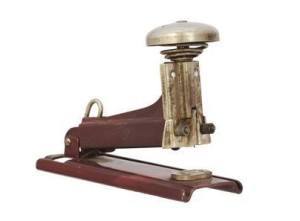
For the first week of classes we read two excerpts from books, the first being “Stuff Matters” and the second being “Pre-Industrial Societies.” In “Stuff Matters” it talks about how a schoolboy got wounded on his way home from school by a man asking for money. Later in the police station the boy contemplates the weapon and the staple on the forms he was filling out, wondering about the origins and design of the metal. He places importance on the objects we use everyday and yet pay so little attention to. These objects make up our whole worlds and if you take them away the world is gone too. Interestingly enough, the author also mentions how people in different professions have different perceptions of what an object is, what it can do, and what it can be. Additionally, he touches on how humans have stayed consistent with certain kinds of materials even when supposedly better ones exist which can be attributed to a person’s discipline and how they get enjoyment from different objects. In short, objects matter, regardless of how seemingly inconsequential they are.
In “Pre-Industrial Societies” centers on industry and the conditions from which human experience originates. In order to be considered a civilized society it needs to be complex with branches that go off in various directions but that all connect to a single point (like cause and effect). The designation of labor and who does what and all the different levels of it clearly mark a civilized society from a primitive one. Additionally, a ruler or leader is very important because they specialize in a subject which pushes others to specialize as well prompting society to become more complex and civilized. Differences amongst people also force a greater reliance on rules and structure which in turn does the same to a ruler because someone needs to enforce the rules. You’re not doing it yourself which means you rely less on persuasion and your own efforts. Basically primitive societies rely on self-help and civilization on someone else to keep peace. Towards the end it talks about how even primitive societies must emulate civilized ones in terms of their political organization in order to remain afloat.
I currently don’t have anything on my to-do list aside from the regular coursework for this class and my other classes.
A question I had was at what point does the process of modernization/industrialization/civilization stop or does it just never stop? Also at some point is it just nearly impossible to continue modernization due to loss of natural resources?
Miodownik, Mark. Stuff Matters: Exploring the Marvelous Materials That Shape Our Man-Made World. New York, New York: Houghton Mifflin Harcourt, 2014.
Crone, Patricia. Pre-Industrial Societies: Anatomy of the Pre-Modern World. London: Oneworld, 2015.
